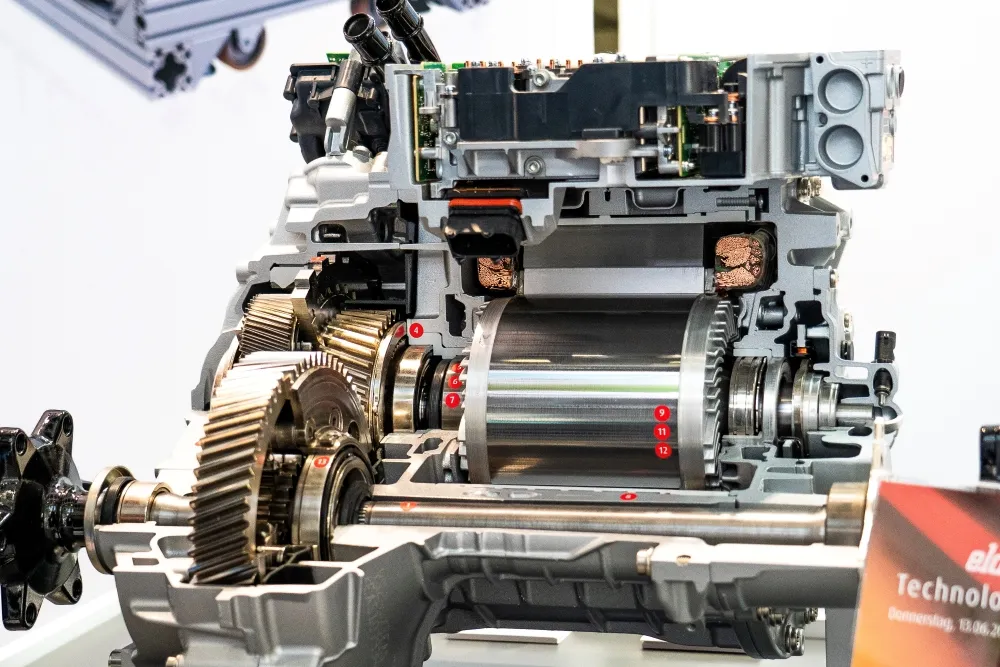
The performance of e-motors relies on materials like permanent magnets, windings, and motor-core laminations. Copper is commonly used for windings due to its conductivity and cost, while rare earth elements (REEs) such as neodymium, dysprosium, and terbium are crucial for permanent magnets in e-motors.
S&P Global Mobility forecasts, as of 2024, 83% of e-motors in BEVs are based on permanent magnets, highlighting the heavy reliance on REEs. Manufacturers prefer these motors for their efficiency and power density, which enhance performance and range. Demand for e-axle permanent magnet motors is expected to grow from 14.8 million units in 2024 to 45.8 million units by 2030, at a 21% CAGR.