新闻与洞察中心
24个月以上的交货期:变压器供应商的新常态
本文内容简介
- a.Introduction: A Global Transformer Supply-Demand Imbalance
- b.Power Transformers: The Segment Under the Greatest Pressure
- c.Regional Trends in Transformer Lead Times
- d.The Component Supply Chain Behind Transformer Lead Times
- e.Implications for Transformer Component Suppliers
- f.Conclusion: A Structural Shift in the Transformer Supply Chain
- g.About the Author:
- h.About PTR:
引言:全球变压器供需失衡
The global transformer industry is facing one of the most severe supply bottlenecks in decades. Lead times for large power transformers, which typically ran between 7 and 14 months before the pandemic, have stretched well beyond 24 months in most major markets. For some specialized units, procurement timelines are approaching 36 to 48 months. The International Energy Agency's (IEA) 2025 report "Building the Future Transmission Grid," based on a 2024 survey of industry participants, indicates that lead times have almost doubled on average since 2021, with manufacturers reporting record backlogs.
Demand for transformers, both distribution and power, is surging across key regional markets. PTR market intelligence indicates a significant rise in transformer demand across key regions such as Asia-Pacific (APAC), Europe, and North America by 2030. The drivers are structural: grid expansion and modernization, renewable energy integration, electrification of transport and industry, data center growth, and aging infrastructure replacement.
Yet manufacturing capacity has failed to keep pace. Transformer original equipment manufacturers (OEMs) are struggling to fulfill orders, resulting in longer lead times, extended production cycles, and growing bottlenecks in the supply of critical components. This strain extends well beyond the OEMs themselves. Component suppliers throughout the value chain are feeling the pressure too, as constrained transformer output reshapes procurement priorities and investment decisions. For those positioned to respond, the market presents meaningful strategic opportunities.
电力变压器:压力最大的细分领域
理解Transformer的分段结构
并非所有变压器都面临同样的压力。配电变压器体积较小、产量较高,主要服务于本地电网。其交货周期在2023年曾一度超过100周,但此后已有所缓解。而电力变压器则另当别论。这些大型的定制化设备在输电网络和发电升压点处以高压运行。每台变压器都必须根据具体项目要求制造,并单独进行测试和认证。它们无法实现批量生产。
为何电力变压器的交货周期正面临最长的等待期
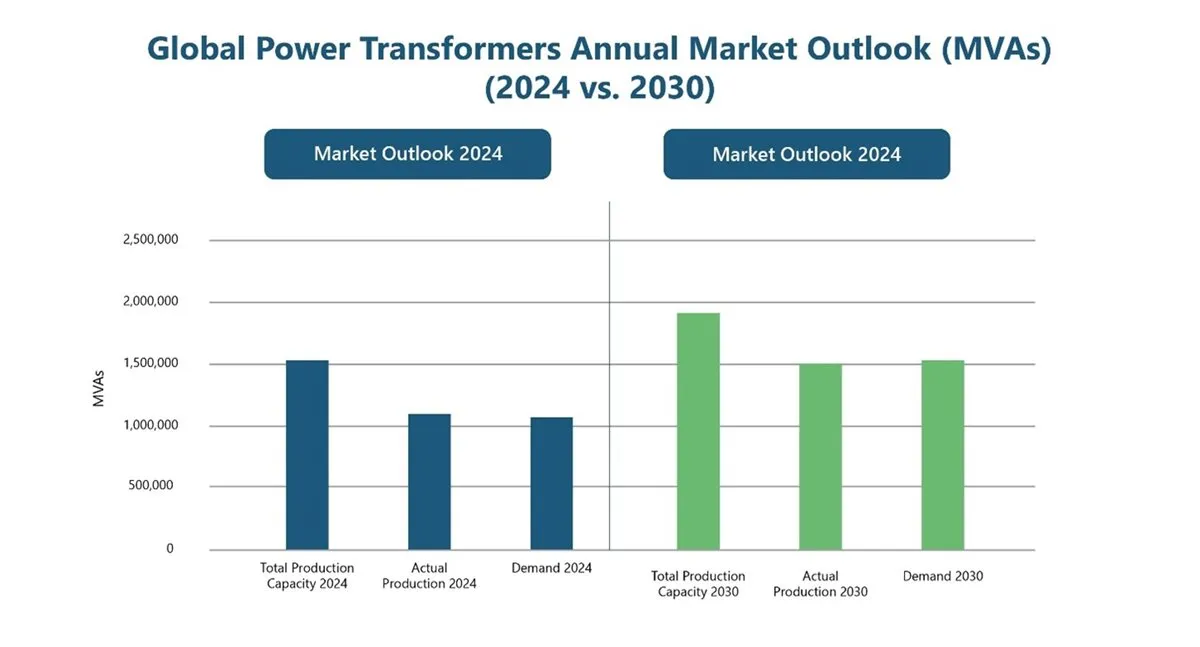
在所有细分市场中,大功率变压器(LPT)的交货周期增幅最为显著。在疫情爆发前,采购一台典型的大功率变压器通常需要12至14个月。如今,北美和欧洲地区的交货周期在某些情况下已延长至60个月,而亚太地区(APAC)则约为12个月。 这主要由四个结构性因素造成:高度定制化的工程设计、漫长的制造和测试周期、对少数专用零部件的依赖,以及全球范围内能够生产最大规格变压器的制造商数量有限。目前,全球大功率变压器生产设施的OEM产能利用率平均约为70%,预计到2030年将达到80%,这使得生产能力几乎无法消化新的需求激增。 变压器价格也呈现出相同的走势:国际能源署(IEA)的2025年报告显示,在某些情况下,变压器价格按实际价值计算已达到疫情前水平的2.6倍。
图片见此处第13页。
变压器交货周期的区域趋势
North America faces some of the most acute supply pressure globally. Over 70% of the US power grid is older than 25 years, and approximately 2.1% of the total transformer fleet is retired annually. Grid interconnection queues, renewable integration targets, and data center buildouts have all surged simultaneously. The US also relies on a single domestic producer of grain-oriented electrical steel (GOES), the core raw material in transformer manufacturing, making the supply chain particularly fragile. PTR projects a revenue compound annual growth rate (CAGR) of approximately 5% for the North American power transformer market from 2023 to 2030, with the US driving nearly 80% of regional demand.
Europe has a well-established manufacturing base and is a net exporter of LPTs, supplying approximately 40% of US LPT imports. However, rising internal demand is absorbing that capacity. The European power transformer market is projected to grow at a CAGR of 12.7% from 2024 to 2030, driven by high-voltage grid expansion, aging infrastructure replacement, and industrial electrification. The EU's target of 45% renewable energy by 2030 requires deployment of around 600 GW of solar and 510 GW of wind capacity, directly fueling transformer demand. LPT lead times in Europe currently range from 48 to 60 months.
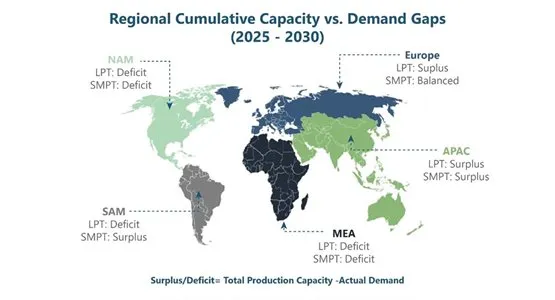
APAC remains the world's largest manufacturing hub with the shortest lead times, averaging around 12 months for LPTs. However, strong domestic demand from China and India limits the capacity available to buyers elsewhere. PTR data identifies LPT and small-to-medium power transformer (SMPT) deficits in the Middle East and Africa through 2030, reflecting rapid grid expansion in those regions combined with near-total dependence on imports.
图片见此处第21页。
影响变压器交货周期的元器件供应链
A transformer build moves only as fast as its slowest component. GOES is the foundation of every transformer core and one of the most constrained inputs in the chain. US market data points to price increases of 60 to 70% since 2020, with Cleveland-Cliffs the sole domestic GOES producer. Copper is the other primary material input: the National Renewable Energy Laboratory's (NREL) 2024 study attributed current shortages in part to simultaneous pressure across GOES, copper, and aluminum, with copper prices rising nearly 10% in 2023 alone.
Beyond raw materials, high-voltage bushings and on-load tap changers (OLTCs) are the components most consistently flagged as build-schedule bottlenecks. Both are highly specialized, certified per application, and served by a limited number of qualified global suppliers. A delay in either holds up the entire transformer build regardless of how far along everything else is. Transformer oil and insulating fluids add further strain, as tightening sustainability requirements push manufacturers toward alternative fluid specifications that are not yet widely available.
欢迎莅临CWIEME柏林展会,与全球变压器制造商、零部件供应商及行业专家齐聚一堂,共同探索解决方案、建立合作伙伴关系,并在快速发展的市场中保持竞争力。
立即注册对变压器零部件供应商的影响
从供应商到战略供应合作伙伴
零部件供应商传统上主要在价格和规格符合性方面展开竞争。这种格局正在发生变化。面临缩短生产周期压力的原始设备制造商(OEM)正将供应商更早地纳入采购讨论。长期供货协议正逐渐成为标准做法。在供应商资格认定决策中,供货可靠性如今与成本同等重要,且OEM正扩大其合格供应商基数,以降低单一来源风险,特别是在钢带电极(GOES)、套管和有载变压器(OLTC)领域。
关键零部件细分市场的增长机遇
衬套制造商直接受益于各大主要地区持续进行的高压输电网络扩建。OLTC供应商所处的市场高度集中,任何中断都会对下游产生巨大影响。GOES和磁芯材料生产商面临产能投资挑战:新生产线的投产需要数年时间,且必须具备长期需求可见性才能证明其投资合理性。自2023年以来,仅北美地区宣布的OEM制造投资就接近18亿美元,这代表着对区域性零部件供应商的切实下游需求。
本地化与供应链多元化
地理上的邻近性正逐渐成为一种真正的竞争差异化因素。无论是公用事业公司还是原始设备制造商(OEM),都面临着越来越大的压力,需要证明其供应链的韧性。对于零部件制造商而言,能够向北美和欧洲的OEM制造集群供货,如今已成为供应商资格认证中的重要优势,而不仅仅是一种物流上的便利。
结论:Transformer 供应链的结构性转变
Lead times of 24 months and beyond are not temporary disruptions. NREL projects that US distribution transformer capacity may need to grow by 160 to 260% by 2050 relative to 2021 levels. PTR market intelligence points to sustained growth through 2030 across all principal markets, with demand reinforced simultaneously by grid modernization, renewable integration, industrial electrification, and data center expansion.
In this environment, component suppliers have moved from the background of the transformer value chain to a position of genuine strategic importance. Those who invest in capacity, build closer OEM relationships, and demonstrate consistent supply reliability are well placed to grow with a market that is expanding for structural, not cyclical, reasons. The opportunity for component suppliers to define their role in this shift is open now.
关于作者:

阿扎尔·法亚兹
二级高级分析师 - PTR
阿扎尔·法亚兹(Azhar Fayyaz)是PTR, Inc.的二级高级分析师,负责领导该公司变压器研究工作,为全球客户提供关于变压器、开关设备及变电站自动化的专业见解。凭借其技术背景和电力工程硕士学位,他具备深厚的行业专业知识和实用的分析能力。
关于 PTR:
With over a decade of experience in the Power Grid and New Energy sectors, PTR Inc. has evolved from a core market research firm into a comprehensive Strategic Growth Partner, empowering clients’ transitions and growth in the renewable energy landscape and E-mobility, particularly within the electrical infrastructure manufacturing space.
联系方式: