Centro notizie e approfondimenti
Tempi di consegna superiori a 24 mesi: la nuova normalità per i fornitori di trasformatori
Cosa tratta questo articolo
- a.Introduction: A Global Transformer Supply-Demand Imbalance
- b.Power Transformers: The Segment Under the Greatest Pressure
- c.Regional Trends in Transformer Lead Times
- d.The Component Supply Chain Behind Transformer Lead Times
- e.Implications for Transformer Component Suppliers
- f.Conclusion: A Structural Shift in the Transformer Supply Chain
- g.About the Author:
- h.About PTR:
Introduzione: uno squilibrio globale tra domanda e offerta di trasformatori
The global transformer industry is facing one of the most severe supply bottlenecks in decades. Lead times for large power transformers, which typically ran between 7 and 14 months before the pandemic, have stretched well beyond 24 months in most major markets. For some specialized units, procurement timelines are approaching 36 to 48 months. The International Energy Agency's (IEA) 2025 report "Building the Future Transmission Grid," based on a 2024 survey of industry participants, indicates that lead times have almost doubled on average since 2021, with manufacturers reporting record backlogs.
Demand for transformers, both distribution and power, is surging across key regional markets. PTR market intelligence indicates a significant rise in transformer demand across key regions such as Asia-Pacific (APAC), Europe, and North America by 2030. The drivers are structural: grid expansion and modernization, renewable energy integration, electrification of transport and industry, data center growth, and aging infrastructure replacement.
Yet manufacturing capacity has failed to keep pace. Transformer original equipment manufacturers (OEMs) are struggling to fulfill orders, resulting in longer lead times, extended production cycles, and growing bottlenecks in the supply of critical components. This strain extends well beyond the OEMs themselves. Component suppliers throughout the value chain are feeling the pressure too, as constrained transformer output reshapes procurement priorities and investment decisions. For those positioned to respond, the market presents meaningful strategic opportunities.
Trasformatori di potenza: il segmento sottoposto alla maggiore pressione
Comprendere i segmenti dei trasformatori
Non tutti i trasformatori sono soggetti alla stessa pressione. I trasformatori di distribuzione sono unità più piccole e prodotte in grandi volumi che servono le reti locali. I loro tempi di consegna hanno raggiunto un picco superiore alle 100 settimane nel 2023, ma da allora si sono ridotti. I trasformatori di potenza sono un altro discorso. Queste grandi unità progettate su misura operano a livelli di alta tensione nelle reti di trasmissione e nei punti di elevazione della tensione di generazione. Ciascuna deve essere costruita secondo i requisiti specifici del progetto, testata individualmente e certificata. Non possono essere prodotti in serie.
Perché i trasformatori di potenza stanno registrando i tempi di consegna più lunghi
I grandi trasformatori di potenza (LPT) hanno registrato l’aumento più marcato dei tempi di consegna rispetto a qualsiasi altro segmento. Prima della pandemia, un LPT tipico poteva essere reperito in 12-14 mesi. Oggi, i tempi di consegna in Nord America e in Europa si estendono fino a 60 mesi in alcuni casi, rispetto a circa 12 mesi nella regione APAC. Quattro fattori strutturali spiegano questa situazione: progettazione altamente personalizzata, lunghi cicli di produzione e collaudo, dipendenza da un numero ristretto di componenti specializzati e una base globale limitata di produttori in grado di realizzare le unità di maggiori dimensioni. I tassi di utilizzo degli impianti degli OEM dedicati agli LPT si attestano attualmente in media intorno al 70% a livello globale e si prevede che raggiungano l’80% entro il 2030, lasciando poco margine per assorbire nuovi picchi di domanda. I prezzi dei trasformatori hanno seguito la stessa traiettoria: il rapporto dell’AIE del 2025 ha rilevato che, in alcuni casi, i prezzi hanno raggiunto, in termini reali, un valore pari a 2,6 volte i livelli pre-pandemia.
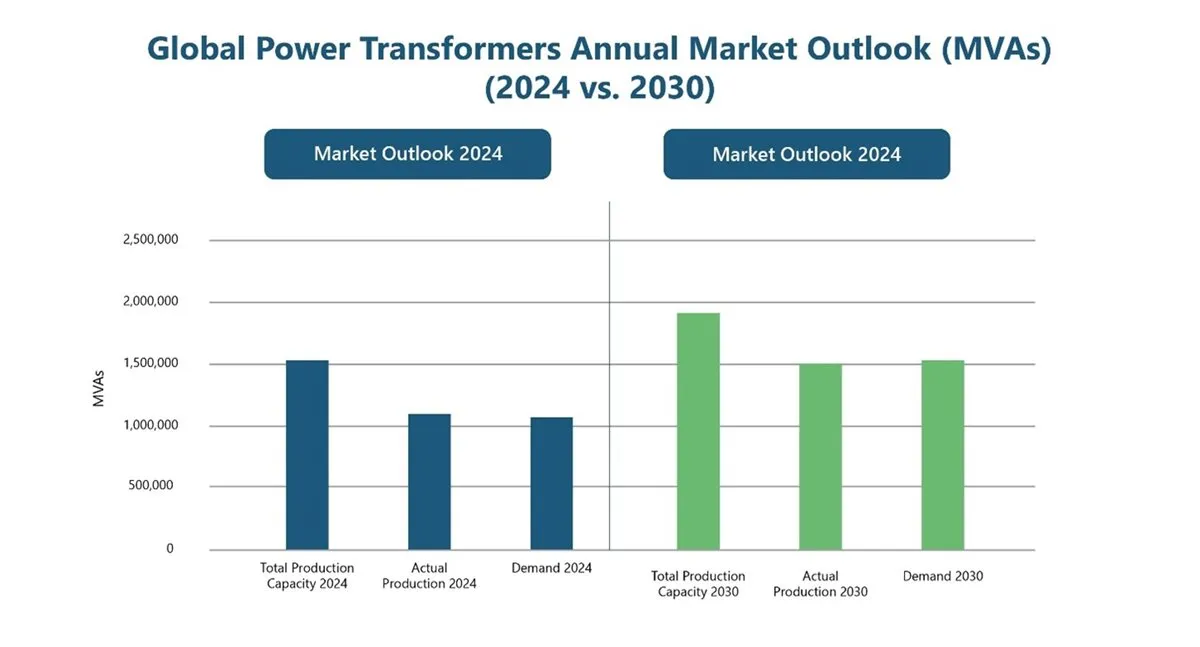
L'immagine è disponibile qui, a pagina 13.
Tendenze regionali nei tempi di consegna dei trasformatori
North America faces some of the most acute supply pressure globally. Over 70% of the US power grid is older than 25 years, and approximately 2.1% of the total transformer fleet is retired annually. Grid interconnection queues, renewable integration targets, and data center buildouts have all surged simultaneously. The US also relies on a single domestic producer of grain-oriented electrical steel (GOES), the core raw material in transformer manufacturing, making the supply chain particularly fragile. PTR projects a revenue compound annual growth rate (CAGR) of approximately 5% for the North American power transformer market from 2023 to 2030, with the US driving nearly 80% of regional demand.
Europe has a well-established manufacturing base and is a net exporter of LPTs, supplying approximately 40% of US LPT imports. However, rising internal demand is absorbing that capacity. The European power transformer market is projected to grow at a CAGR of 12.7% from 2024 to 2030, driven by high-voltage grid expansion, aging infrastructure replacement, and industrial electrification. The EU's target of 45% renewable energy by 2030 requires deployment of around 600 GW of solar and 510 GW of wind capacity, directly fueling transformer demand. LPT lead times in Europe currently range from 48 to 60 months.
APAC remains the world's largest manufacturing hub with the shortest lead times, averaging around 12 months for LPTs. However, strong domestic demand from China and India limits the capacity available to buyers elsewhere. PTR data identifies LPT and small-to-medium power transformer (SMPT) deficits in the Middle East and Africa through 2030, reflecting rapid grid expansion in those regions combined with near-total dependence on imports.
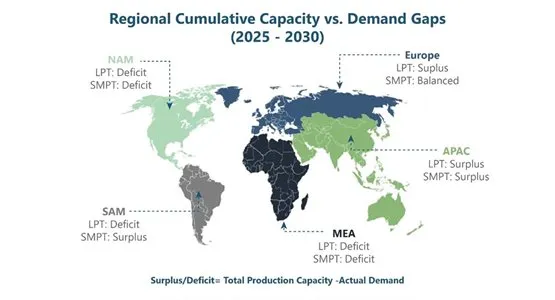
L'immagine è disponibile qui, a pagina 21.
La catena di approvvigionamento dei componenti alla base dei tempi di consegna dei trasformatori
A transformer build moves only as fast as its slowest component. GOES is the foundation of every transformer core and one of the most constrained inputs in the chain. US market data points to price increases of 60 to 70% since 2020, with Cleveland-Cliffs the sole domestic GOES producer. Copper is the other primary material input: the National Renewable Energy Laboratory's (NREL) 2024 study attributed current shortages in part to simultaneous pressure across GOES, copper, and aluminum, with copper prices rising nearly 10% in 2023 alone.
Beyond raw materials, high-voltage bushings and on-load tap changers (OLTCs) are the components most consistently flagged as build-schedule bottlenecks. Both are highly specialized, certified per application, and served by a limited number of qualified global suppliers. A delay in either holds up the entire transformer build regardless of how far along everything else is. Transformer oil and insulating fluids add further strain, as tightening sustainability requirements push manufacturers toward alternative fluid specifications that are not yet widely available.
Unitevi ai principali produttori mondiali di trasformatori, ai fornitori di componenti e agli esperti del settore al CWIEME di Berlino per esplorare nuove soluzioni, stringere partnership e rimanere competitivi in un mercato in rapida evoluzione.
Iscriviti oraImplicazioni per i fornitori di componenti per trasformatori
Da semplici fornitori a partner strategici nella catena di approvvigionamento
I fornitori di componenti hanno tradizionalmente gareggiato sul prezzo e sulla conformità alle specifiche. Questa dinamica sta cambiando. Gli OEM, sotto pressione per ridurre i tempi di produzione, coinvolgono i fornitori nelle trattative di approvvigionamento con molto maggiore anticipo. Gli accordi di fornitura a lungo termine stanno diventando una prassi standard. L’affidabilità dell’approvvigionamento viene ora valutata alla pari del costo nelle decisioni di qualificazione, e gli OEM stanno ampliando la propria base di fornitori approvati per ridurre l’esposizione a un unico fornitore, in particolare per quanto riguarda le lamiere magnetiche (GOES), le boccole e gli OLTC.
Opportunità in crescita nei segmenti chiave dei componenti
I produttori di boccole traggono vantaggio diretto dal continuo potenziamento delle reti di trasmissione ad alta tensione in tutte le principali regioni. I fornitori di OLTC operano in un mercato concentrato in cui qualsiasi interruzione ha conseguenze a valle di proporzioni sproporzionate. I produttori di GOES e di materiali per nuclei devono affrontare una sfida in termini di investimenti nella capacità produttiva: la messa in servizio di nuove linee di produzione richiede anni e, per essere giustificata, necessita di una visibilità a lungo termine sulla domanda. I quasi 1,8 miliardi di dollari di investimenti nella produzione OEM annunciati solo in Nord America dal 2023 rappresentano una domanda a valle reale per i fornitori di componenti con sede nella regione.
Localizzazione e diversificazione della catena di approvvigionamento
La vicinanza geografica sta diventando un vero e proprio fattore di differenziazione competitiva. Sia le utility che gli OEM sono sottoposti a una pressione crescente per dimostrare la resilienza della catena di approvvigionamento. Per i produttori di componenti, la capacità di rifornire i cluster produttivi degli OEM in Nord America e in Europa rappresenta ormai un vantaggio significativo nella qualificazione dei fornitori, non solo una comodità logistica.
Conclusione: un cambiamento strutturale nella catena di approvvigionamento dei trasformatori
Lead times of 24 months and beyond are not temporary disruptions. NREL projects that US distribution transformer capacity may need to grow by 160 to 260% by 2050 relative to 2021 levels. PTR market intelligence points to sustained growth through 2030 across all principal markets, with demand reinforced simultaneously by grid modernization, renewable integration, industrial electrification, and data center expansion.
In this environment, component suppliers have moved from the background of the transformer value chain to a position of genuine strategic importance. Those who invest in capacity, build closer OEM relationships, and demonstrate consistent supply reliability are well placed to grow with a market that is expanding for structural, not cyclical, reasons. The opportunity for component suppliers to define their role in this shift is open now.
Informazioni sull'autore:

Azhar Fayyaz
Analista senior II - PTR
Azhar Fayyaz è Senior Analyst II e dirige la ricerca sui trasformatori presso PTR.Inc, fornendo a clienti di tutto il mondo approfondimenti su trasformatori, quadri elettrici e automazione delle sottostazioni. Grazie al suo background tecnico e al master in Ingegneria Elettrica, offre una profonda competenza nel settore e analisi concrete.
Informazioni su PTR:
With over a decade of experience in the Power Grid and New Energy sectors, PTR Inc. has evolved from a core market research firm into a comprehensive Strategic Growth Partner, empowering clients’ transitions and growth in the renewable energy landscape and E-mobility, particularly within the electrical infrastructure manufacturing space.
Contatti: