.png?ext=.png)
Clifford Ondieki came to CWIEME Berlin 2025 as a master’s student focused on power systems planning. One conversation at the show reshaped his research and led to an IEEE Best Paper Award.
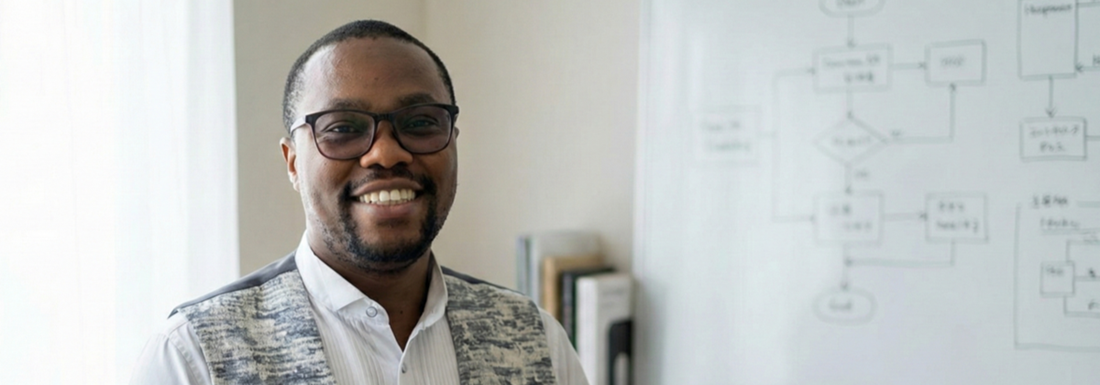
Clifford Ondieki came to CWIEME Berlin 2025 as a master’s student focused on power systems planning, with EV charging still mostly theoretical in his work. One conversation at the show about grid uncertainty reshaped his research and led to an IEEE Best Paper Award on EV charger deployment and grid optimisation.
In this Q&A, he shares how being “in the right room” at CWIEME Berlin influenced his path as a future engineer.
Before attending CWIEME Berlin, what were you focusing on in your master’s and what were your main interests in power systems or EV charging?
Before CWIEME Berlin, my master’s focus was largely on power systems planning and grid stability, with a growing interest in how electric mobility would stress existing distribution networks. I was particularly curious about EV charging, but mostly from a theoretical and academic angle; load flow analysis, voltage constraints, and regulatory frameworks without yet fully understanding how those challenges play out in real deployment decisions.
What made you decide to attend CWIEME Berlin and what were your expectations for the event at the time?
I decided to attend CWIEME Berlin because I was actively looking for a space where industry reality meets engineering theory. My expectation was to learn about components and technologies, but also to listen to understand what problems manufacturers, grid operators, and system designers were struggling with beyond textbooks and simulation models.
When you first walked in, what stood out to you about the event?
What stood out immediately was the density of expertise in one place. You could walk from a transformer stand to a motor manufacturer to a grid technology discussion within minutes. It felt less like an exhibition and more like a living system where every conversation revealed another dependency in the energy ecosystem.
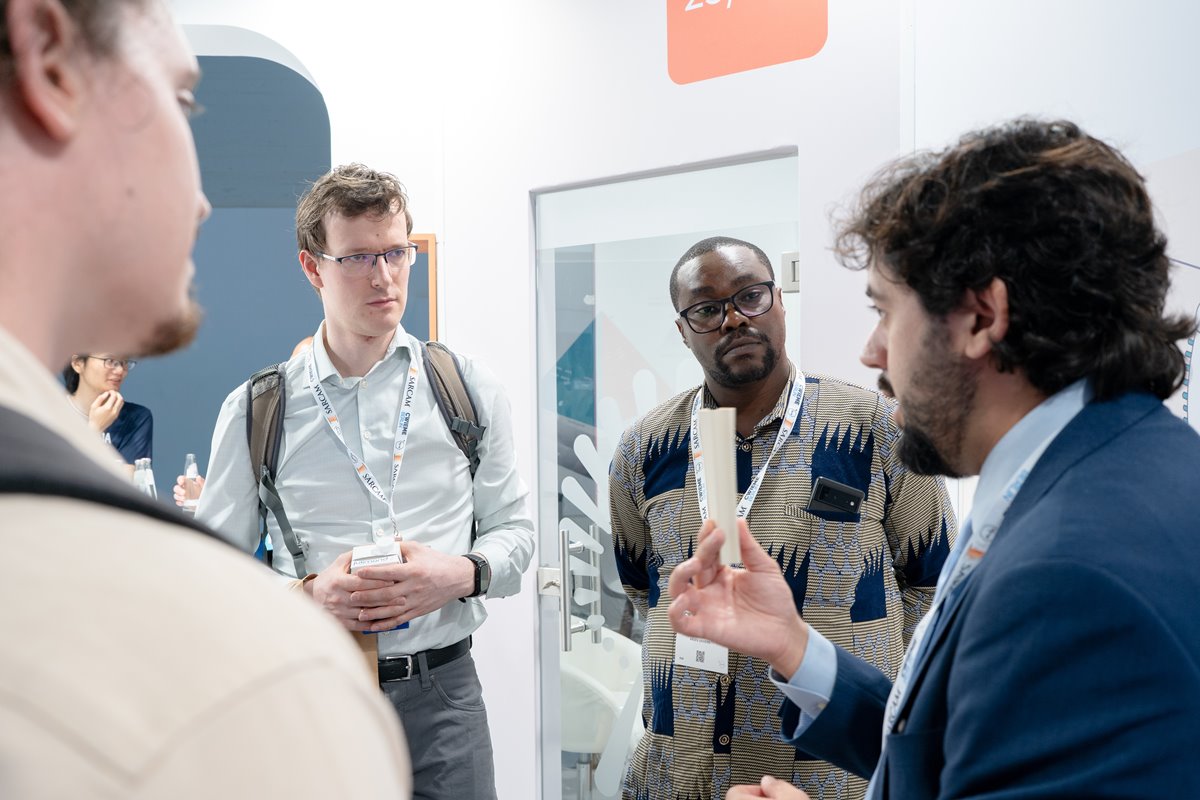
Can you take us back to the moment of the discussion at CWIEME that first sparked the idea for your paper on EV charger deployment and grid optimisation?
There was a conversation with industry professionals discussing EV charging points where someone casually said, “The grid is no longer the bottleneck; uncertainty is.” That sentence stayed with me. It crystalised the gap between deterministic grid planning methods and the probabilistic reality of EV behaviour. That moment directly shaped the core question of my paper.
You wrote that “sometimes the moment that changes your future looks like being present in the right room.” What did “the right room” mean to you then?
At the time, “the right room” meant being surrounded by people who were honest about complexity. Not overselling solutions, not simplifying challenges but willing to admit uncertainty and trade-offs. That environment gave me permission to think differently and more boldly about my research direction.
From an engineering perspective, what did you learn about real challenges around EV charging and the grid that you hadn’t fully seen before?
I learned that technical feasibility is rarely the hardest part. The real challenge is coordination; between grid constraints, user behaviour, regulation, and economics. A technically optimal solution can still fail if it doesn’t align with operational realities or stakeholder incentives.
Can you briefly explain the focus of your paper on EV charger deployment and grid optimisation and why it matters?
My paper focuses on robust EV charger deployment under uncertainty, using fuzzy logic and multi-objective optimisation to balance grid constraints, user fairness, and cost. It matters because traditional planning approaches assume perfect forecasts, which simply don’t exist in real grids. Robust methods help utilities make safer, fairer decisions under uncertainty.
What did the IEEE Best Paper Award mean to you personally?
Personally, it was deeply affirming. It validated not just the technical work, but the decision to bridge industry insight with academic rigor. Coming from a non-linear career path, the award confirmed that interdisciplinary thinking has real value.
If you could send one message to exhibitors who meet students and early career engineers, what would it be?
Never underestimate the impact of a genuine technical conversation. For students, a five-minute discussion can shape years of direction. What feels routine to an exhibitor can be transformative to someone still finding their path.
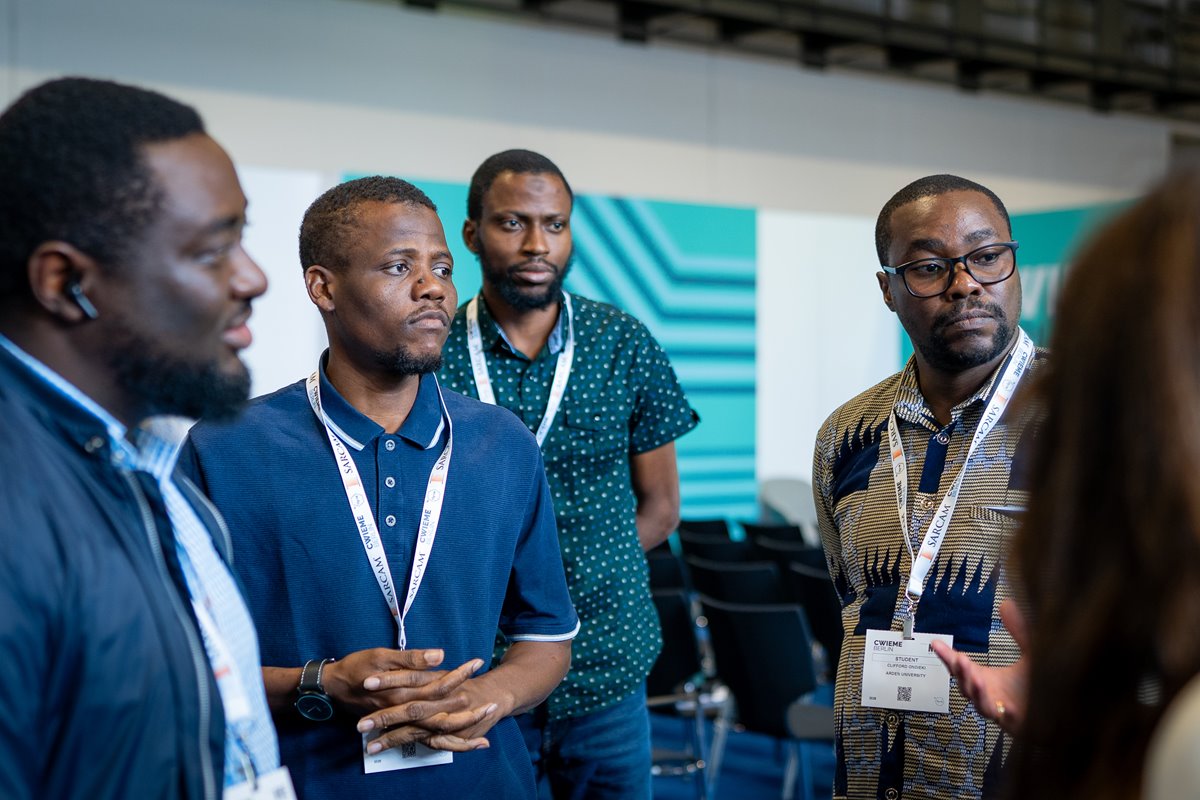
What advice would you give to master’s students or early career engineers launching their careers?
Be curious before being impressive. Spend time understanding systems deeply both technical and human. Careers don’t move in straight lines, but clarity comes from showing up, asking good questions, and staying open to unexpected connections.
How has this experience changed how you want to work with the wider energy community?
It made me more intentional about knowledge sharing and collaboration. I now see my work not just as solving isolated problems, but as contributing to a collective learning process across academia, industry, and policy.
In one sentence, how did CWIEME Berlin influence your path in 2025?
CWIEME Berlin turned curiosity into direction by placing me in conversations that reshaped how I think about engineering impact.
Clifford’s story shows how attending CWIEME Berlin can help future engineers move from theory to real impact through honest, technical conversations.
If you want your work to matter in the future of power systems and electrification, CWIEME Berlin is where you should be – and you can learn more about our Future Engineers programme here.